


9 Expert Feng Shui Tips to Revitalize Your Living Room
The living room is often referred to as the heart of your home — a sanctuary for relaxation, rejuvenation, and connection with family and friends.
As such an important space in your home, incorporating Feng Shui principles can elevate the room’s energy, fostering balance and tranquillity.
To guide you in balancing the energy in your space, Dato Joey Yap shares his expert Feng Shui insights for transforming your living room into a haven of positive vibes!
Joey Yap is the founder of the Mastery Academy of Chinese Metaphysics and Chief Consultant of the Joey Yap Consulting Group. He is an authority in Chinese metaphysics and a prolific author of 186 books and counting.
Why follow living room Feng Shui rules
While some may view Feng Shui as a mere gimmick, many have experienced its benefits by incorporating its simple principles into their living spaces. Joey believes that, at the root of Feng Shui, it contains “principles of design, architecture, and environmental psychology.”
When applied thoughtfully, Feng Shui can create a more harmonious and balanced living space.
Here’s why applying Feng Shui in your living room matters:
Improved energy flow
Feng Shui focuses on the smooth flow of energy, or chi, throughout a space. By thoughtfully arranging furniture and elements, you encourage a positive, harmonious energy flow in your living room. This contributes to a more vibrant and balanced atmosphere, making the space feel inviting and revitalized.
Increased comfort and functionality
Feng Shui promotes intentional furniture placement and a clutter-free environment to ensure your living room is both comfortable and functional. Feng Shui aside, a thoughtfully arranged layout also encourages ease of movement and enhances the practical aspects of daily living.
Increased productivity and creativity
A clutter-free and organized living room promotes a clear mind. By following the rules of Feng Shui, you create an environment that supports focus, creativity, and productivity. This can be particularly beneficial for those who use the living room as a home office or creative hub.
Creates balance in your home
Feng Shui emphasizes balance, drawing on the principles of Yin and Yang to create harmony. Whether it’s emotional well-being or interior design symmetry, applying Feng Shui can help create a living room with energy that feels calm and harmonious.
Overview of Feng Shui tips for your living room
Ideal Feng Shui living room layout
A Feng Shui-inspired living room layout prioritizes the smooth flow of energy throughout the space. For instance, your leather sofas and armchairs should be positioned to face the main entrance. Additionally, furniture pieces should have sufficient space around them.
Here’s an example of what an ideal Feng Shui living room layout could look like:
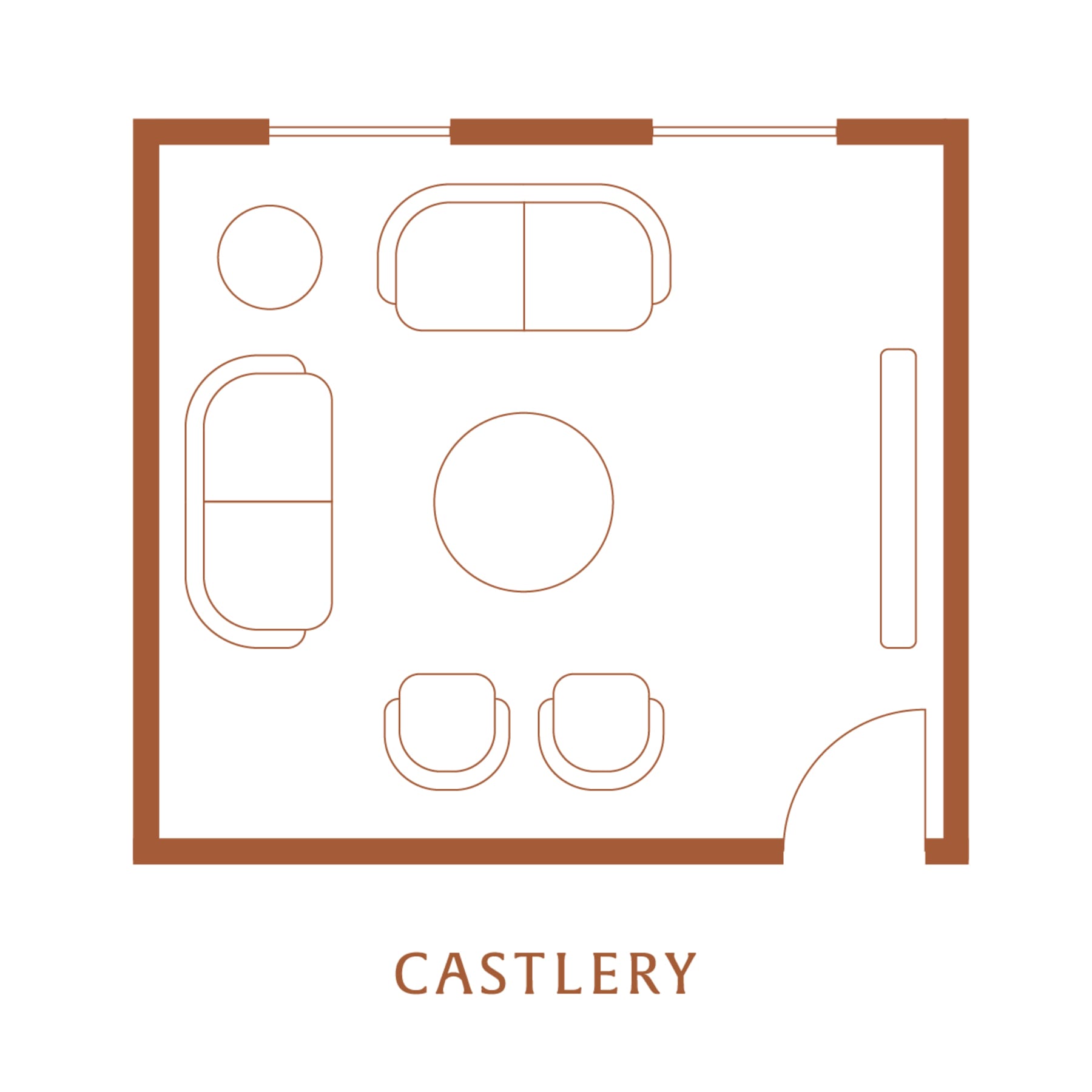
An ideal Feng Shui living room layout.
9 Feng Shui tips for the living room
Embrace the ‘command position’
A cornerstone of Feng Shui, the ‘command position’ emphasizes creating a sense of security and control within a space.
“In the context of the living room, the command position involves strategically placing key pieces of furniture, especially the sofa, to optimize the flow of energy and promote a harmonious atmosphere,” explains Joey.
For example, position the sofa so that it faces the main entrance of your home, allowing you to see the door without being directly in line with it. This can be achieved by angling the sofa or flushing it against a wall with a diagonal view of the entrance.
While the command position is crucial, Joey emphasizes the importance of balancing it with comfort. Ensure that the seating arrangement feels natural and promotes relaxation, avoiding rigid or uncomfortable setups.
2. Take note of furniture arrangement
“Rearranging furniture can freshen up a space and make it more functional, but it won’t necessarily bring about life-altering changes. This is a common misconception,” quips Joey.
However, thoughtful furniture arrangement can significantly enhance the energy flow and balance in the living room.
Ensure clear and unobstructed pathways in the living room to allow energy to circulate freely throughout the space. Avoid placing furniture in ways that create obstacles or disrupt the natural flow of movement.
Joey recommends positioning your main seating area to encourage face-to-face interaction and foster a sense of connection. The layout of sofas and chairs should invite social engagement while maintaining comfort and supporting the overall flow of energy.
3. Introduce rounded furniture
“In Feng Shui, sharp edges are generally considered undesirable because they’re believed to create harsh or negative energy, disrupting the smooth flow of chi in a space,” says Joey.
Sharp edges can stem from high tables, walls, or cabinets, which may create pointed energy.
To counteract this, Joey recommends opting for rounded furniture, such as round coffee tables or modern side tables in your living room which align with the symbolism of circles in Feng Shui. Where possible, consider concealing sharp structural elements by curving wall structures or using dividers to break up or redirect sharp energy.
4. Harmonize with the five elements
“In Feng Shui philosophy, there are five elements that represent different types of energy and forces in the natural world: Wood, Fire, Earth, Metal, and Water,” explains Joey.
“Each element is believed to interact with the others, and a harmonious balance of these energies helps to create a space that’s energetically balanced.”
To incorporate these elements into your living room, consider using wood furniture, such as a wooden coffee table, bookshelves, or wooden frames. You can also introduce the Earth element through ceramics, stones, or crystals to enhance the sense of stability and balance within the space.
5. Balance Yin and Yang energies
Balancing yin and yang energies in your living room is a fundamental principle in Feng Shui, representing the interconnectedness of opposites.
“Achieving equilibrium by balancing the yin (soft, passive) and the yang (bright, active) energies can foster a dynamic yet peaceful atmosphere,” says Joey.
To introduce yin energy into a vibrant space, incorporate soft and cozy textiles like plush throws, cushions, or soft rugs. These elements can create a comfortable and inviting atmosphere, especially in the main seating area of the living room.
The layout of your furniture can also contribute to the balance of yin and yang. For example, you can consider establishing a quiet reading nook for intimate conversations (yin) while maintaining an open layout that encourages movement and activity (yang).
6. Use a good mix of lighting
Lighting is another important element in Feng Shui that can influence the energy flow and ambiance of your living room.
Joey suggests incorporating a balanced mix of lighting in the living room, as this multifunctional space is used for relaxation, socializing, and watching TV.
To maximize natural lighting, keep windows unobstructed and choose curtains that can filter and soften sunlight. Joey also encourages a layered lighting approach to cater to various needs. Combine ambient lighting with ceiling fixtures, task lighting with table lamps, and accent lighting with wall sconces or spotlights to create a harmonious and adaptable atmosphere.
Recommended read: What’s The Best Lighting for Every Room in Your Home?
7. Reflect positive energy with mirrors
In Feng Shui, mirrors are believed to have the power to reflect and enhance energy within a space.
“Mirrors are known for their ability to reflect light, and in Feng Shui, natural light is considered a positive source of energy,” he says.
Joey also adds that mirrors symbolically double whatever they reflect, which can amplify abundance and prosperity. This concept ties closely to magnifying positive energy, wealth, and opportunities in your living room.
Strategically place mirrors in your living room or near the entryway to reflect positive elements, such as artwork or your modern dining room sets. This not only enhances the natural light entering the space, but also creates a brighter, more vibrant atmosphere.
“But, be mindful of placing a mirror directly opposite your main entrance as this is believed to bounce back the energy, disrupting the energy flow,” Joey advises.
8. Introduce indoor plants
Aside from wood furniture and color accents, indoor plants are a natural way to bring the Wood element in Feng Shui into your home. Not only does greenery help to bring the outdoors inside, but it also adds positive energy flow to your living room and is believed to enhance various aspects of well-being.
Joey suggests choosing healthy and thriving plants to represent vitality and positive energy. Examples include money plants, snake plants, and orchids, which symbolize wealth, protective energy, and beauty, respectively. Avoid plants that are withering or have dead leaves, as they may signify stagnant or negative energy.
9. Keep the living room clutter-free
Decluttering is the core principle of Feng Shui that goes beyond mere cleanliness and organization. According to Feng Shui philosophy, the state of your living environment mirrors the state of your mind and life.
“Clutter is believed to obstruct the natural flow of energy in a space. It’s also seen as stagnant energy or blocked opportunities,” Joey explains.
By removing unnecessary items in your living room, you enable energy to circulate freely throughout the living room, fostering a harmonious atmosphere. Symbolically, decluttering also opens space for new and positive experiences to enter your life.
To keep your space organized and clutter-free, invest in storage solutions. Stylish storage bins, shelves, or furniture with built-in storage can help conceal clutter and maintain a clean appearance.
Creating harmony in your living room with Feng Shui
Feng Shui is not just about adhering to ancient practices; it invites us to view our living spaces as dynamic environments where energy, intention, and design converge.
Ultimately, the journey toward a Feng Shui-inspired living room is a personalized one, guided by individual preferences and intentions. Embrace the wisdom of Feng Shui and turn your living room into a sanctuary of positive energy, balance, and profound connection between your inner self and the external environment.
Frequently asked questions about incorporating Feng Shui into your living room
Where should I put mirrors in the living room?
Place mirrors to reflect positive elements like light or artwork, but avoid positioning them directly opposite the main entrance to maintain good energy flow.
How to arrange plants according to Feng Shui in my living room?
Arrange plants in areas that enhance your living room’s energy and visual appeal, such as corners, near windows for natural light, or on shelves. Ensure they don’t block pathways or make the space feel overcrowded. The goal is to create balance and allow energy to flow freely, while also maintaining a clean and harmonious look.
What types of furniture work best in a Feng Shui-inspired living room?
Rounded furniture, like circular coffee tables, helps soften energy and promote balance. Choose furniture that complements the room’s layout and allows for clear pathways.